
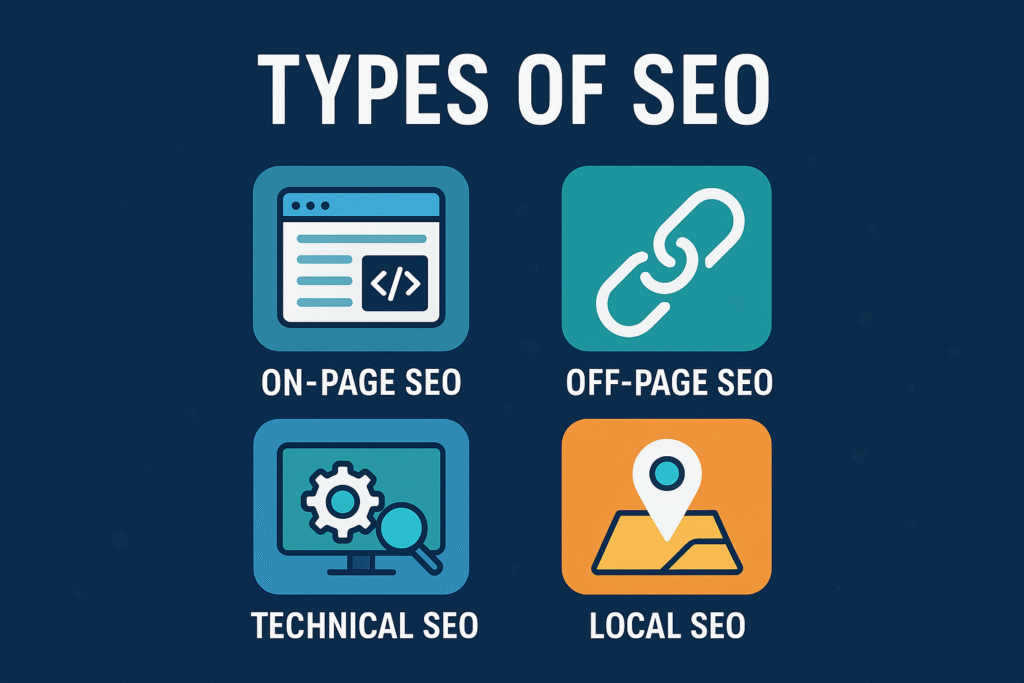
Search Engine Optimization (SEO) is the backbone of digital marketing, helping websites rank higher on search engine results pages (SERPs) and attract organic traffic. However, SEO is not a one-size-fits-all strategy. It encompasses several types, each serving a unique purpose. Understanding these types of SEO is crucial for crafting a holistic and effective SEO strategy in 2025.
What Are the Main Types of SEO?
1. On-Page SEO
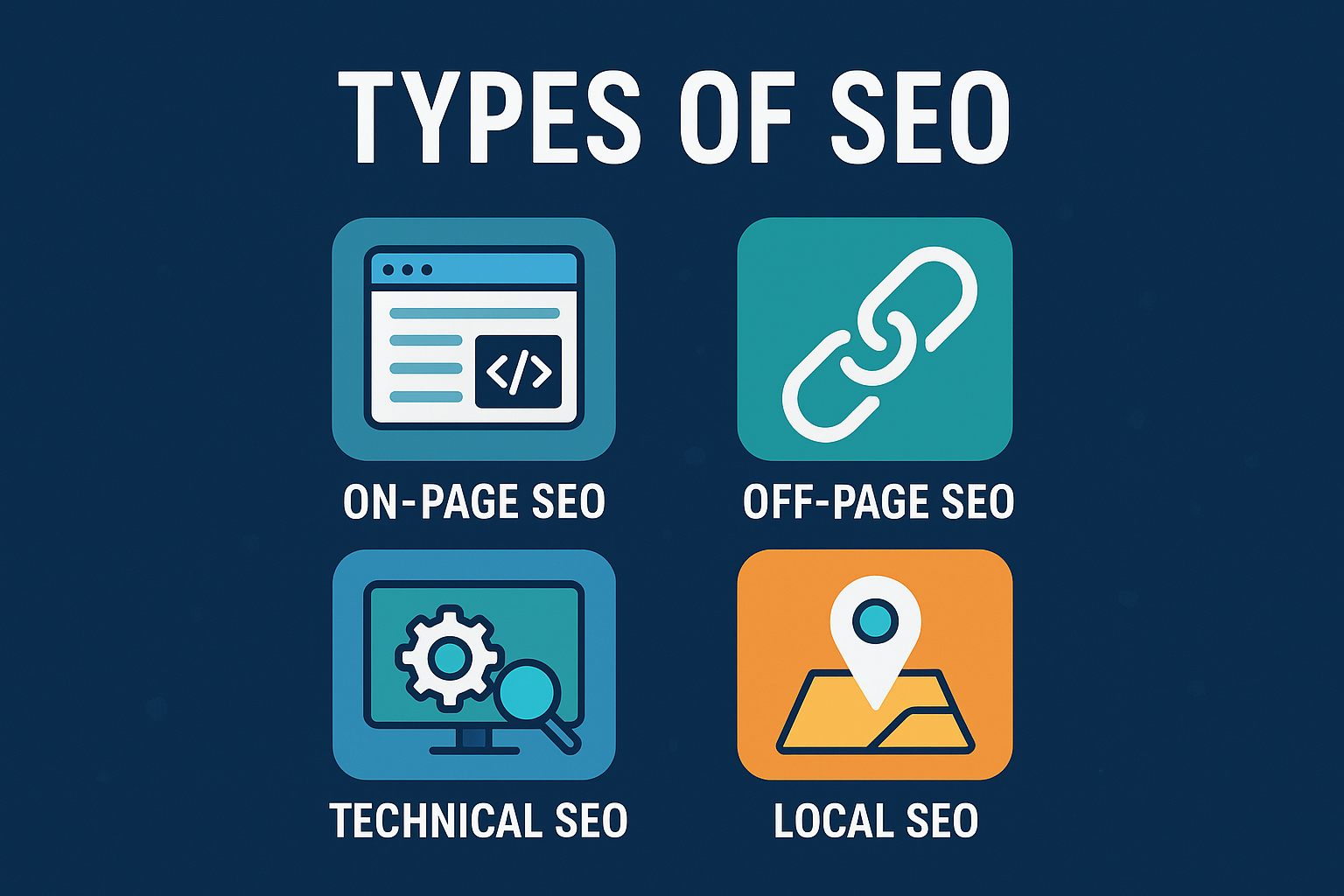
On-page SEO refers to optimizing individual web pages to rank higher and earn more relevant traffic. This includes:
- Keyword Optimization: Using relevant keywords naturally within your content, titles, headers, and meta descriptions.
- Content Quality: Creating valuable, informative, and engaging content that answers user queries.
- Internal Linking: Connecting related pages within your site to improve navigation and distribute page authority.
- Image Optimization: Using descriptive file names and alt text for images to enhance accessibility and relevancedesignrush.com+1.
2. Off-Page SEO
Off-page SEO involves actions taken outside your website to impact your rankings. The most common tactic is:
- Link Building: Acquiring high-quality backlinks from authoritative sites to boost your site’s credibility and trustworthiness.
- Social Media Engagement: Promoting content on social platforms to increase visibility and drive traffic.
- Brand Mentions: Encouraging mentions of your brand across the web, even without direct linkssvitla.com.
3. Technical SEO
Technical SEO ensures your website meets the technical requirements of modern search engines. Key aspects include:
- Site Speed: Optimizing load times for better user experience and rankings.
- Mobile-Friendliness: Ensuring your site is responsive and performs well on mobile devices.
- Crawlability: Making it easy for search engine bots to crawl and index your pages.
- Structured Data: Implementing schema markup to help search engines understand your content betterhighervisibility.com.
4. Local SEO
Local SEO is essential for businesses serving specific geographic areas. It focuses on:
- Google My Business Optimization: Claiming and optimizing your business listing.
- Local Keywords: Using location-based keywords to attract nearby customers.
- Reviews and Ratings: Encouraging positive reviews to build trust and improve local rankingswix.com.
5. Content SEO
Content SEO revolves around creating and optimizing content to meet user intent and search engine guidelines. This includes:
- Topical Authority: Covering topics comprehensively to establish expertise.
- User Intent: Aligning content with what users are searching for—informational, navigational, commercial, or transactional.
- Content Freshness: Regularly updating content to keep it relevant and accuratesearchengineland.com+1.
6. Image and Video SEO
With the rise of visual search, optimizing images and videos is more important than ever:
- Alt Text: Describing images for accessibility and search engines.
- File Names: Using descriptive, keyword-rich file names.
- Video Transcripts: Providing transcripts for video content to improve indexingnealschaffer.com.
Why Understanding the Types of SEO Matters
Each type of SEO plays a distinct role in your overall strategy. On-page and content SEO ensure your site is relevant and valuable to users, while technical SEO makes sure search engines can access and understand your content. Off-page SEO builds your site’s authority, and local SEO connects you with nearby customers. By integrating all these types, you create a robust foundation for sustainable organic growthsearchengineland.com+2.
Best Practices for Implementing Different Types of SEO in 2025
- Focus on User Intent: Align your content and keywords with what users are actually searching for.
- Prioritize Mobile Optimization: With mobile-first indexing, ensure your site is fully optimized for mobile users.
- Build High-Quality Backlinks: Focus on earning links from reputable sources rather than quantity.
- Leverage AI and Automation: Use AI tools to streamline keyword research, content creation, and performance tracking.
- Monitor and Adapt: SEO is ever-evolving. Regularly audit your site and adjust your strategy based on performance data and algorithm updatesfirstpagesage.com+2.
Conclusion
Understanding the different types of SEO is the first step toward building a successful digital marketing strategy. By combining on-page, off-page, technical, local, and content SEO, you can improve your website’s visibility, attract more organic traffic, and achieve your business goals in 2025 and beyond.